
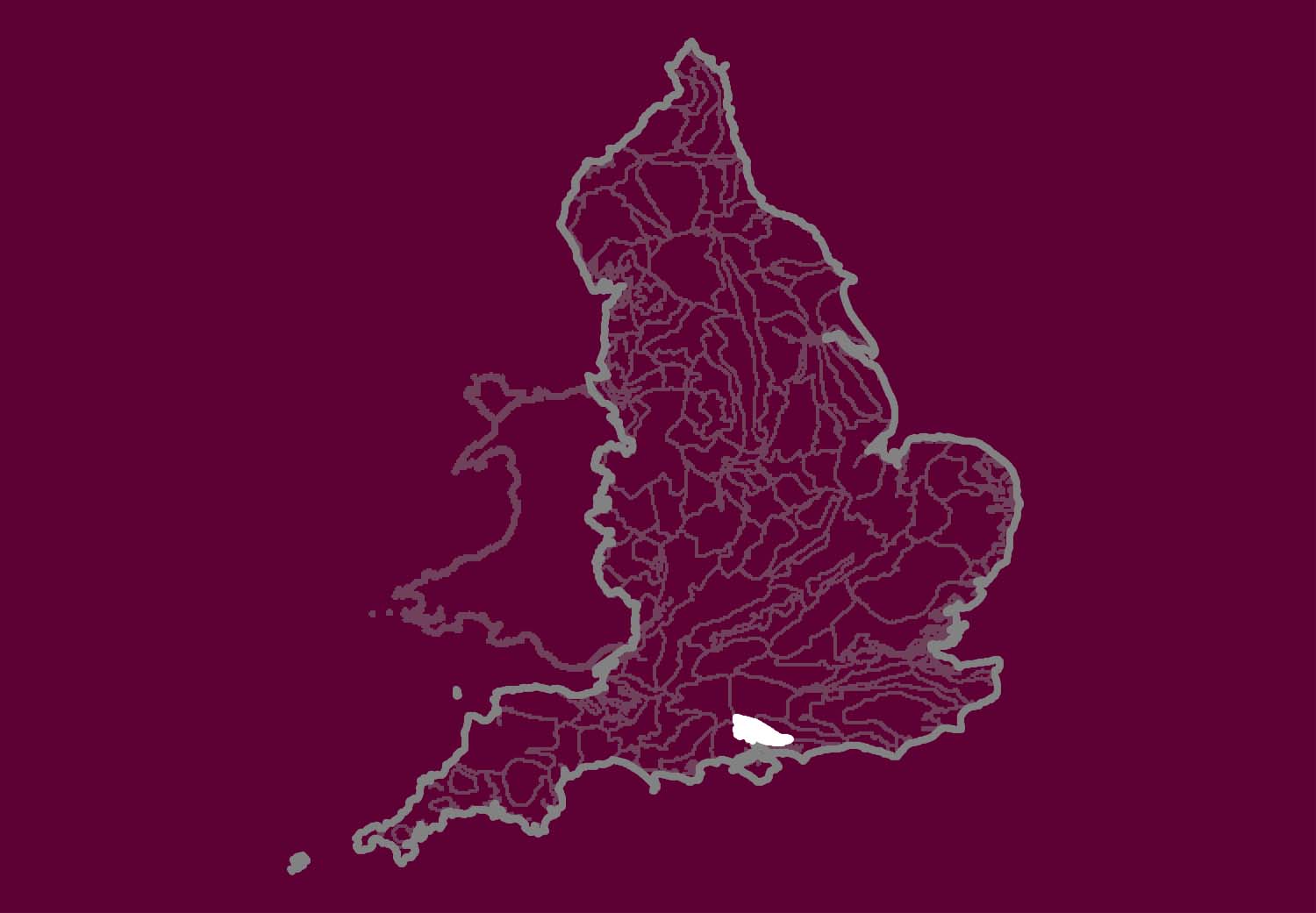
National Character Area 128
South Hampshire Lowlands - Analysis: Landscape Attributes & Opportunities
Analysis supporting Statements of Environmental Opportunity
The following analysis section focuses on the landscape attributes and opportunities for this NCA.
Further analysis on ecosytem services for this NCA is contained in the Analysis: Ecosytem Services section.
Landscape attributes
Portsdown Hill, a distinctive outlying spine-like chalk ridge.
Justification for selection:
- Distinctive spine-like ridge which provides wide views across Southampton Water and a dramatic backdrop to Portsmouth to the north of the city.
- Valuable unimproved chalk grassland, home to several rare chalk grassland species including the endemic early gentian.
- Important resource locally for recreation.
Well-wooded landscape including extensive tracts of ancient semi-natural woodland.
Justification for selection:
- 18 per cent of the land cover of the NCA is woodland of which 46 per cent is classed as ancient semi-natural woodland.
- About three-quarters of the woodlands in the NCA are broadleaved.
- Much of the woodland resource is the remnant of the historic Royal Hunting Forests of Melchet, Buckholt, Bere Ashley and Forest of Bere Portchester.
- Woodlands along the Upper Hamble are notable for stands of small-leaved lime a species in decline elsewhere in Britain.
- Estuary edge woodlands such as those found along the Hamble are significant riverine habitats and show an unusual type of succession, from woodland through brackish marsh to salt marsh.
A patchwork of small, intimate and irregular fields often bounded by hedges of mixed species, sometimes with mature oak hedgerow trees.
Justification for selection:
- Historic pattern of field shape and size, a mixture of late enclosure, assarts and former commons on low-lying undulating farmland.
- Intimacy and enclosure created by lush species-rich hedgerows with numerous field boundary trees, often oak.
- Remnant assart fields reveal historic and more recent incursion into the Forest of Bere.
Well managed farmland including a mosaic of semi-natural habitats.
Justification for selection:
- Mixed farmland and woodland dominated by pasture and livestock farming.
- A wealth of nationally and internationally important habitats particularly diverse semi-natural grasslands including watermeadows, chalk grassland and wood pasture.
Chalk rivers flowing through wide lush river valleys to their estuaries in Southampton Water.
Justification for selection:
- The Itchen and Test are considered to be among the finest examples of chalk rivers anywhere in the world.
- The fast-flowing rivers support many rare or scarce species such as the southern damselfly, otter and the white-clawed crayfish. They also provide an important spawning ground for wild brown trout and salmon.
- Wide river valley bottoms with watermeadows and riverine and estuarine vegetation that supports valuable national and international wildlife habitats.
- Open views within the river valleys contrast with the surrounding more intimate enclosed undulating farmland landscape.
Rural character increasingly influenced by urbanisation and urban fringe.
Justification for selection:
- Villages loosely clustered together and small farms and houses dispersed through the countryside.
- Network of small roads and lanes link settlements and farms.
Landscape opportunities
- Plan for the sustainable development of Southampton and Portsmouth so that the economic benefits can be enjoyed while avoiding any impact on the designated sites within the NCA and the neighbouring New Forest and South Downs National Parks and Chichester Harbour AONB.
- Encourage and develop a strong green infrastructure network in and around urban and industrial developments to improve quality of life, increase access to recreational facilities and the natural environment for the local population, and to relieve pressure on sensitive sites within and adjacent to the NCA while making a positive contribution to local character.
- Manage development, encourage new tree planting and restore/maintain grassland within the historic Forest of Bere to halt further fragmentation of the woodland and farmland and strengthen its rural character and biodiversity interests.
- Extend and link areas of ancient woodland for benefits to biodiversity, recreation and sense of wellbeing.
- Encourage the replacement of conifers with tree species native to the area on ancient woodland sites where appropriate.
- Promote the restoration of traditional woodland management including a coppicing regime for broadleaved woodland.
- Manage, restore, link and replant hedgerows and hedgerow trees to maintain and strengthen field boundary patterns to contribute to the well- wooded character of the NCA.
- Maintain, manage and link areas of unimproved grassland, meadows and pastures, encourage rough woodland edges and the maintenance/construction of ponds within a woodland framework to strengthen pastoral character of farm land and increase wildlife habitats.
- Encourage the restoration, extension and linking of meadow and riparian habitat along the chalk rivers particularly in the Itchen and Test valleys to maintain and improve water quality and biodiversity. Where possible, encourage the traditional grazing of watermeadows.
- Encourage farmers and landowners to engage with the Catchment Sensitive Farming Programme to benefit/improve water quality and management.
- Protect and manage remaining areas of mudflats and other intertidal habitats along Southampton Water and the river estuaries.
- Promote tranquillity for wellbeing and prosperity through measures such as buffering major roads with native woodland and the provision of sustainable transport options.