

National Character Area 159
Lundy - Analysis: Ecosystem Services
Analysis supporting Statements of Environmental Opportunity
The following analysis section focuses on a selection of the key provisioning, regulating and cultural ecosystem goods and services for this NCA. These are underpinned by supporting services such as photosynthesis, nutrient cycling, soil formation and evapo-transpiration. Supporting services perform an essential role in ensuring the availability of all ecosystem services.
Bodiversity and geodiversity are crucial in supporting the full range of ecosystem services provided by this landscape. Wildlife and geologically-rich landscapes are also of cultural value and are included in this section of the analysis. This analysis shows the projected impact of Statements of Environmental Opportunity on the value of nominated ecosystem services within this landscape.
Further analysis on landscape attributes and opportunities for this NCA is contained in the Analysis: Landscape Attributes & Opportunities section.
Natural Capital
Further information on Natural Capital within this NCA is contained in the Natural Capital and Key Ecosystem Services section.
Lundy NCA provides a wide range of benefits to society. Each is derived from the attributes and processes (both natural and cultural features) within the area. These benefits are realised through the ‘ecosystem services’ that flow from the ‘ecosystem assets’ or ‘natural capital’ of a place.
Natural capital means ‘the elements of nature that directly or indirectly produce value to people, including ecosystems, species, freshwater, land, minerals, the air and oceans, as well as natural processes and functions’ (Natural Capital Committee, 2017).
Ecosystem Services Main Beneficiaries
The below map displays the main beneficiaries of each ecosystem service identified within this NCA and neighbouring NCAs. These range from being of international importance to local importance. Some services have not been assessed within all NCAs, and therefore in some NCAs are displayed as “N/A” (not applicable).
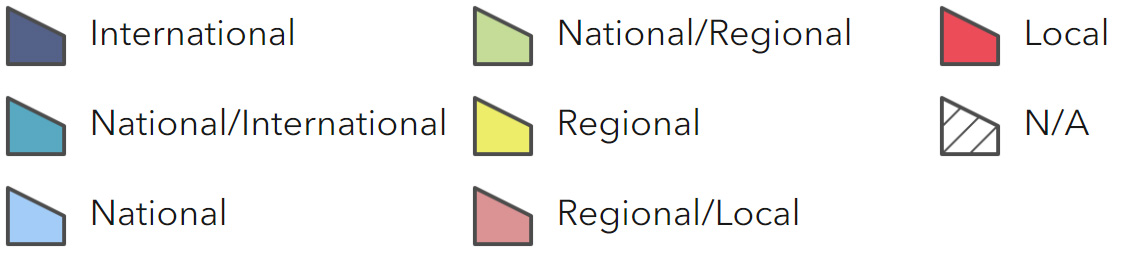
Main Beneficiaries Map
View Main Beneficiaries Map full screen in a new tab View Interactive Map HelpEcosystem service analysis
The following sections show the analysis used to determine key Ecosystem Service opportunities within the area. These opportunities have been combined with the analysis of landscape opportunities to create Statements of Environmental Opportunity. Please note that the following analysis is based upon available data and current understanding of ecosystem services. It does not represent a comprehensive local assessment. Quality and quantity of data for each service is variable locally and many of the services listed are not yet fully researched or understood. Therefore analysis and opportunities may change upon publication of further evidence and better understanding of the inter-relationship between services at a local level.
Note that numbers and figures in the body of the text are based on the 2014 profiles, unless otherwise stated.
Provisioning Services
Food provision
Assets/attributes: main contributors to service –
- Small livestock farm on Lundy
- Feral animals (Soay sheep, sika deer and goats)
- Poor quality Grade 4 and Grade 5 soils
- Fisheries around the island
State – Agriculture takes place across the island. 20 per cent of Lundy’s soils have been classified as Grade 4 and 80 per cent classified as Grade 5 under the Provisional Agricultural Land Classification (ALC) Survey.
Control of feral animals contributes to food provision as culled animals are eaten.
Angling around the island is important for the local economy.
Main beneficiary – Local
Analysis – All of Lundy is grazed either by domestic or feral livestock or both. There is no arable production on the island. There is little or no scope for increasing the amount of land available for food production or outputs from the existing resource.
The numbers of sheep on the island vary depending on a range of factors including vegetation sward height, rabbit numbers and the impacts of grazing by feral stock. Lundy lamb is a premium product.
The population of Soay sheep is managed at approximately 140 breeding ewes to maintain a population that will maintain the condition of the SSSI and produce approximately 30 lambs per year for slaughter.
A small herd of Highland cattle has been introduced; there are plans to market their meat. The cattle will graze in conjunction with ponies.
Populations of sika deer and goats should be kept at the lowest possible level (10 nannies and 10 billies and 30 hinds with 10 stags respectively) that remains sustainable both as a visitor attraction and to produce meat for the Tavern.
The marine protection around Lundy has led to an increase in the number and size of lobsters fished around the island.
All foodstuffs other than the locally- produced meat need to be brought onto the island.
Opportunities – Maintain livestock numbers and manage them sustainably to ensure this does not have a detrimental effect on the other ecosystem services available, for example; water availability, water quality, soil quality and biodiversity. This will in turn bring benefits to wider food provision.
The premium value of Lundy lamb could be increased through extra marketing and the money returned to the island for conservation work.
Highland cattle are being introduced for grazing and there are opportunities to market their meat.
There are continuing opportunities to improve the size and number of lobsters and other species caught outside the No Take Zone as a result of its presence. There are also opportunities to use its success to influence similar zones in other nearby marine locations.
Principal services offered by opportunities –
- Food provision
- Regulating soil erosion
- Regulating water quality
- Sense of history
- Sense of place/inspiration
- Biodiversity
Timber provision
Assets/attributes: main contributors to service –
- Small areas of scrub and stunted trees at the south of the island
State – Existing woodland cover is made up of shrubs and a few stunted trees.
Main beneficiary – Local
Analysis – The exposed nature of the island, thin soils and grazing pressures limit the opportunities for timber production from the existing woodland resource. There is very little potential for timber on Lundy.
Opportunities – Management of scrub would locally provide small amount s of timber for fuel and prevent encroachment into important vegetation communities.
Principal services offered by opportunities –
- Timber provision
- Biodiversity
- Sense of history
Water availability
Assets/attributes: main contributors to service –
- Groundwater and rainfall
State – The principle water supply comes from rainwater topped up by Lundy’s aquifer from which is pumped via a borehole.
Main beneficiary – Local
Analysis – Water availability is the biggest issue for the island. The viability of the natural water supply could be affected by future drought – the supply will be more stressed with extremes of weather. It has been necessary to import drinking water onto the island at times in the past to avoid running the borehole dry.
There are several small ponds on Lundy, the largest being at Pondsbury but these are used by livestock and are not part of the potable supply.
Opportunities – There are limited opportunities to make significant increases in the availability of groundwater on the island.
Further storage tanks could be installed although space for them is limited. The recycling of grey water should be considered as part of any future renovations or development.
There are opportunities to make sure that ponds and groundwater are not polluted by agricultural runoff or spillages, for example, fuel.
Principal services offered by opportunities –
- Water availability
- Biodiversity
- Regulating water quality
- Food provision
Genetic diversity
Assets/attributes: main contributors to service –
- Lundy cabbage and associated invertebrates
- Soay sheep
State – Lundy cabbage, a crop relative present on the island, exists in the coastal vegetation of the area. The semi-natural habitats and bare cliffs where it grows provide favourable conditions for it to thrive.
Main beneficiary – National
Analysis – Lundy cabbage and other maritime cliff species provide a restricted and location-specific pool of genetic material. Lundy cabbage is a crop wild relative that is endemic. Its numbers fluctuate because it is grazed by rabbits and other fauna.
The Lundy cabbage supports an endemic flea beetle and other species that may also be endemic.
Feral on Lundy, the Soay sheep is currently classed as “at risk” by the Rare Breeds Survival Trust.
Opportunities – There is opportunity to maintain Lundy’s unique genetic diversity including the Lundy cabbage which is potentially important in terms of future crop development and food security.
Control the rabbit and feral livestock populations to maintain viable populations of Lundy cabbage – the meat from these could be sold.
Develop posters and literature to educate the visiting public about the importance of crop wild relatives and Lundy cabbage in particular.
Continue to maintain a feral flock of Soay sheep with numbers not detrimental to the important vegetation on the island.
Principal services offered by opportunities –
- Genetic diversity
- Biodiversity
Biomass energy
No information available.
Regulating Services
Climate regulation
Assets/attributes: main contributors to service –
- Carbon storage in scrub and bog communities
State – There is limited carbon storage and sequestration potential; the storage that does occur takes place in Lundy’s scrub and small areas of bog.
Main beneficiary – Local
Analysis – Small areas of peat under heath and bog on the plateau may be vulnerable to desiccation and loss as a result of changing climatic conditions
Bracken, which can store small quantities of carbon, is prevalent, but also invasive and detrimental to other flora.
Carbon storage in this NCA is very limited because of the general lack of mature woodland or wetlands and because of the thin soils that cover the plateau.
Opportunities – Protect the island’s heaths and bogs to retain the carbon storage by maintaining appropriate vegetation through managed grazing and by maintaining suitable water levels.
There is little opportunity to regulate soil erosion, but maintaining suitable vegetative cover may avoid some peat wastage.
Principal services offered by opportunities –
- Climate regulation
- Regulating soil erosion
- Biodiversity
Regulating coastal erosion and flooding
Assets/attributes: main contributors to service –
- The geology of Lundy
State – Most of the coast has granite cliffs.
The southern end of the island consists of softer Morte Slates
Main beneficiary – Local
Analysis – The cliff exposures are maintained by natural processes.
The southern end of the island consists of the softer Morte Slates through which the granite was intruded.
The eastern side of the island is slightly more protected from the elements than the western side.
Opportunities – Opportunities to maintain natural processes by e.g. not increasing the infrastructure of the landing stage area.
Principal services offered by opportunities –
- Regulating coastal erosion
- Sense of place/inspiration
- Recreation
- Geodiversity
Regulating water quality
Assets/attributes: main contributors to service –
- Rainwater
State – For information regarding the current state of water quality within this NCA, refer to the Environment Agency (Draft river basin management plan maps).
Main beneficiary – Local
Analysis – The island’s water is extracted from a borehole and supplemented through small amounts of rainfall.
Lundy’s water is a vital resource for the grazing mammals and the local flora and it is therefore essential to maintain its quality.
Opportunities – There are opportunities to influence and affect the regulation of water quality on Lundy by ensuring that pollutants do not enter water
Principal services offered by opportunities –
- Regulating water quality
- Biodiversity
Regulating water flow
Assets/attributes: main contributors to service –
- There are no significant watercourses on Lundy
State – N/A
Main beneficiary – N/A
Analysis – There are no significant watercourses on Lundy and therefore fluvial flooding is not an issue. This is expected to remain the same into the future.
Opportunities – There are opportunities to prevent meteoric flooding and to minimise the impact on Lundy’s septic tank.
Principal services offered by opportunities –
- Regulating water flow
Regulating soil quality
Assets/attributes: main contributors to service –
- Acidic podzol soils resulting from the underlying geology
State – The soils are of universally poor quality, being chiefly graded at Grade 5 under the Provisional Agricultural Land Classification Survey. Some 20 per cent of the soil was classified as of slightly higher quality at Grade 4.
Main beneficiary – Local
Analysis – The soils of Lundy are chiefly brown podzols, giving rise to impoverished acidic conditions. The podzols are humic in the northern half of the island, where heathland vegetation predominates.
Opportunities – There may be opportunities for local composting to provide opportunities to increase soil carbon at selected spots on the Island
Principal services offered by opportunities –
- Regulating soil quality
Regulating soil erosion
Assets/attributes: main contributors to service –
- Permanent pasture
- Scrub
State – Most of the island is now covered with permanent vegetation, grassland or scrub, and the soils are largely stabilised.
Main beneficiary – Local
Analysis – In an exposed coastal environment the soils found on Lundy would be susceptible to erosion if the land were cultivated. Given that most of the area outside the village is now under permanent pasture or heathland the soils are generally stable.
Some of the thin peaty soils developing under bog and heath vegetation may become more susceptible to erosion as a result of desiccation following periods of prolonged drought.
Around quarries and in areas with high visitor pressure soil erosion may be more pronounced
Opportunities – Minimise or prevent soil erosion through careful maintenance of vegetative cover by reducing feral animal numbers and by moderating and managing visitors to the island.
Principal services offered by opportunities –
- Regulating soil erosion
- Climate regulation
- Biodiversity
Pollination
Assets/attributes: main contributors to service –
- Semi-natural lowland heathland
State – There are 87 ha of lowland heathland, 17 per cent of the land area.
Main beneficiary – Local
Analysis – Habitat for pollinating insects is limited to small areas of semi-natural lowland heathland, the product of long- standing land use on Lundy; however, other than domestic vegetable and flower growing there is little service provided.
Opportunities – Continue clearing invasive Rhododendron and therefore to restore the extent of semi- natural habitats to benefit populations of pollinating insects.
Principal services offered by opportunities –
- Pollination
- Food provision
- Biodiversity
Pest regulation
Assets/attributes: main contributors to service –
- Natural predators
Regulating coastal erosion
State – The geology of Lundy.
Main beneficiary – Most of the coast has granite cliffs. The southern end of the island consists of softer Morte Slates.
Analysis – The cliff exposures are maintained by natural processes. The southern end of the island consists of the softer Morte Slates through which the granite was intruded. The eastern side of the island is slightly more protected from the elements than the western side.
Opportunities – Opportunities to maintain natural processes by e.g. not increasing the infrastructure of the landing stage area.
Principal services offered by opportunities –
- Regulating coastal erosion
- Sense of place/inspiration
- Recreation
- Geodiversity
Cultural Services
Sense of place/inspiration
Assets/attributes: main contributors to service –
- A remote Atlantic island
- Rugged cliffs
- The plateau
- The path from the jetty
- The settlement
State – The cliffs, plateau, and settlement give Lundy a unique sense of place, particularly combined with its remote Atlantic island location.
Main beneficiary – Regional
Analysis – Lundy, an island with a plateau edged by steep cliffs, has a unique sense of place. Views from the island across the sea and to the English and Welsh coasts also contribute to this.
The Atlantic weather has a strong influence on the island. On a stormy day, the waves crashing against the jetty and the cliffs can be spectacular and inspiring, as can the tranquillity found on a calm day or moonlit night.
Opportunities – Continue to protect, manage and interpret the unique scenery of Lundy, maintaining the link between the Atlantic island location, geology, ecology and people.
Continue to provide interpretation at the MS Oldenburg’s mainland departure points for people who would like to visit Lundy but are unable to do so to find out more.
Principal services offered by opportunities –
- Sense of place/inspiration
- Recreation
Sense of history
Assets/attributes: main contributors to service –
- The Castle
- Millcombe House
- St. Helena’s Church
- Archaeological remains
State – Millcombe House and the Castle are currently in use as tourist accommodation.
Archaeological remains are scattered across the island and are indicative of some continuous human occupation over time.
The island has a ‘colourful’ history much influenced by a number of notable characters.
Main beneficiary – Regional
Analysis – St Helena’s church (Anglican) is still in use, part of the deanery of Hartland on the mainland. Many historic buildings have been restored or are maintained by the Landmark Trust and are currently used for holiday accommodation – Millcombe House alone sleeps 12 occupants.
The history of the island is closely connected with the wider maritime heritage of the UK, including its defensive role on many occasions and as a stepping-stone to the mainland.
Opportunities – Continue to preserve and interpret the history of Lundy, to make it accessible to the widest possible audience.
Protect and maintain the heritage assets found on the island, particularly those that represent wider maritime connections and national associations.
Principal services offered by opportunities –
- Sense of history
- Sense of place/inspiration
- Recreation
Tranquility
Assets/attributes: main contributors to service –
- The remote and disconnected nature of the island
State – Very quiet island, especially in calm weather
Main beneficiary – Regional
Analysis – Lundy can be very tranquil in calm weather. There is no mains electricity between midnight and 6:00 a.m. so sound pollution from televisions and other electrical appliances is minimal.
Opportunities – The tranquillity of the island should be maintained by monitoring and responding to changes in the levels of intrusion resulting from increased visitor pressures and any demands for increased infrastructure.
Principal services offered by opportunities –
- Sense of tranquillity
- Sense of place/inspiration
- Recreation
Recreation
Assets/attributes: main contributors to service –
- Walking, rock-climbing, wildlife- watching, general relaxation
- Lundy is now open all year round
State – Recreation and tourism on Lundy is seasonal, consisting largely of day- trippers with 23 properties, managed by the Landmark Trust under lease from the National Trust, being available for overnight or longer accommodation.
The whole of Lundy is accessible land. People visit Lundy for walking, climbing and bouldering – the Devil’s Slide is a popular climb.
Main beneficiary – National
Analysis – Seasonal day-trippers and staying visitors use the island in large numbers. In general they have a limited effect on the landscape, since their activities are mainly confined to the southern half of the island. Visitors come not only to experience the island’s tranquillity but also for bird-watching, diving, climbing and bouldering, and the sense of history.
Opportunities – Aim to prevent adverse effects of seasonal day-trippers and resident holidaymakers by monitoring and responding to localised erosion and wildlife disturbance.
Encourage ‘green’ snorkelling and diving and the appreciation and scientific monitoring of marine life around Lundy.
Encourage sustainable climbing to ensure that cliffs and their flora and fauna are not damaged/ disturbed.
Continue the development of visitors’ understanding of the importance of Lundy, supporting the production of literature and information accessible to a wide audience.
Principal services offered by opportunities –
- Recreation
- Sense of place/inspiration
- Sense of history
- Tranquillity
Biodiversity
Assets/attributes: main contributors to service –
- Marine flora and fauna
- Birds
- Mammals
- Endemic species
State – Lundy is protected under many international and British designations and is part of the UNESCO North Devon Biosphere Reserve. Most of Lundy is a Site of Special Scientific Interest (SSSI), the same area plus the waters around the island are a Special Area of Conservation (SAC) of approximately 3,400 ha.
Lundy was England’s first Marine Nature Conservation Zone and first No Take Zone. The 4 km2 NTZ lies on the east coast of the island.
The numbers of Lundy cabbage and its endemic flea beetle vary from year to year.
Main beneficiary – International
Analysis – The areas of maritime cliff and slope and other BAP habitats and the non-intensive agriculture provide favourable conditions for the island’s important terrestrial and bird species.
Marine conservation around Lundy has demonstrated best practice for the rest of England to follow. Lundy’s marine biodiversity is tremendously important and it was England’s first Marine Nature Reserve (MNR) which became a Marine Conservation Zone and has a proportion that is designated as a No take Zone (NTZ).
There is abreedingcolony ofgrey seals, and Lundy is very important for its bird life. It hosts some of the largest cliff-nesting colonies in south-west England, with guillemots, kittiwakes, fulmars, Manx shearwaters and shags among the species found. Peregrines and ravens both nest on the cliffs, and there is a small but increasing puffin population.
Lundy is also very important for migrating birds including passerines. Lundy has red- listed species including starlings, linnets, skylark and house sparrows.
There are feral Soay sheep, feral goats, sika deer and pygmy shrews have made Lundy their home.
Lundy has two unique species – Lundy Cabbage and a flea-beetle.
Invasive species pose a significant risk to Lundy. Rats have previously caused huge damage.
Rhododendron has also been a major problem but work to clear it has been largely completed.
Opportunities – Maintain and extend the marine conservation areas surrounding the island as appropriate
Prevent overgrazing by managing livestock numbers and the numbers of feral animals.
Maintain and improve biosecurity requirements through, for example the removal of rats and ensure they do not re-colonise the island. No domestic pets are allowed onto Lundy.
Rhododendron should be completely absent from Lundy by 2025, creating space and conditions suitable for native species.
Principal services offered by opportunities –
- Sense of place
- Genetic diversity
Geodiversity
Assets/attributes: main contributors to service –
- Striking landform that clearly reveals geological processes
- Exposures in the cliffs, at the Earthquake, and in old quarries.
- Local stone used for building
State – Coastal processes maintain exposures but can rapidly erode the Morte Slates of the southern peninsula. The granites and dykes are more resistant to erosion.
Main beneficiary – National
Analysis – The granites of which Lundy is largely composed are related to the opening of the Atlantic Ocean during the Tertiary, unlike the granites of Devon and Cornwall that are related to the earlier (late Carboniferous) Variscan Orogeny. They are unique in England – other complexes of the British Tertiary Volcanic Province are all found in Scotland and Northern Ireland. It is noteworthy that they originated partly from the same lower crustal material as the Cornubian Batholith, which is why Lundy granite has chemical similarities to the Devon and Cornwall granites.
Intrusions from later volcanic activity cut through both the slates and the granites.
Access to the cliffs and disused quarries allows continued research into the geodiversity of the NCA and of England and further afield. Exposure of these features also makes a positive contribution toward sense of place and sense of history. Exposure to the geology of the cliffs is maintained by natural processes.
Opportunities – Maintain views of geological features and exposures where appropriate, for instance making sure that the Earthquake does not become overgrown, so as to improve understanding and enjoyment of geodiversity and Lundy’s geological history.
Identify and support ongoing and new opportunities to research the local British Tertiary Volcanic Province granites.
Principal services offered by opportunities –
- Geodiversity
- Sense of place/inspiration
- Sense of history