

National Character Area 137
Isle of Portland - Analysis: Ecosystem Services
Analysis supporting Statements of Environmental Opportunity
The following analysis section focuses on a selection of the key provisioning, regulating and cultural ecosystem goods and services for this NCA. These are underpinned by supporting services such as photosynthesis, nutrient cycling, soil formation and evapo-transpiration. Supporting services perform an essential role in ensuring the availability of all ecosystem services.
Bodiversity and geodiversity are crucial in supporting the full range of ecosystem services provided by this landscape. Wildlife and geologically-rich landscapes are also of cultural value and are included in this section of the analysis. This analysis shows the projected impact of Statements of Environmental Opportunity on the value of nominated ecosystem services within this landscape.
Further analysis on landscape attributes and opportunities for this NCA is contained in the Analysis: Landscape Attributes & Opportunities section.
Natural Capital
Further information on Natural Capital within this NCA is contained in the Natural Capital and Key Ecosystem Services section.
The Isle of Portland NCA provides a wide range of benefits to society. Each is derived from the attributes and processes (both natural and cultural features) within the area. These benefits are realised through the ‘ecosystem services’ that flow from the ‘ecosystem assets’ or ‘natural capital’ of a place.
Natural capital means ‘the elements of nature that directly or indirectly produce value to people, including ecosystems, species, freshwater, land, minerals, the air and oceans, as well as natural processes and functions’ (Natural Capital Committee, 2017).
Ecosystem Services Main Beneficiaries
The below map displays the main beneficiaries of each ecosystem service identified within this NCA and neighbouring NCAs. These range from being of international importance to local importance. Some services have not been assessed within all NCAs, and therefore in some NCAs are displayed as “N/A” (not applicable).
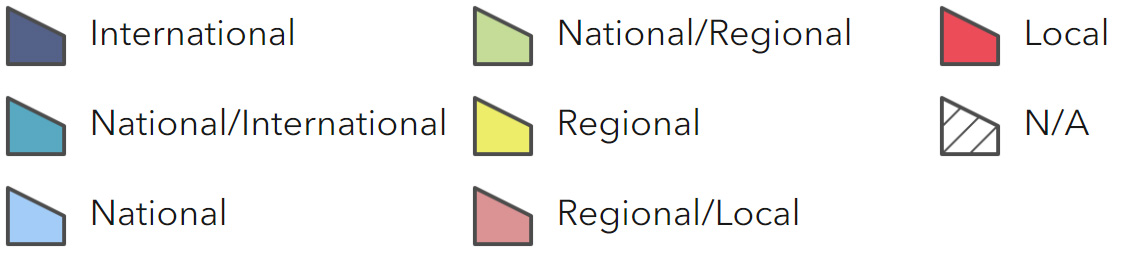
Main Beneficiaries Map
View Main Beneficiaries Map full screen in a new tab View Interactive Map HelpEcosystem service analysis
The following sections show the analysis used to determine key Ecosystem Service opportunities within the area. These opportunities have been combined with the analysis of landscape opportunities to create Statements of Environmental Opportunity. Please note that the following analysis is based upon available data and current understanding of ecosystem services. It does not represent a comprehensive local assessment. Quality and quantity of data for each service is variable locally and many of the services listed are not yet fully researched or understood. Therefore analysis and opportunities may change upon publication of further evidence and better understanding of the inter-relationship between services at a local level.
Note that numbers and figures in the body of the text are based on the 2014 profiles, unless otherwise stated.
Provisioning Services
Food provision
Assets/attributes: main contributors to service –
- There is currently little agriculture on Portland, with only one active farmer.
State – The majority of the land surface on Portland has been used for quarrying rather than agriculture. A long tradition of pastoral farming persists on a small scale.
Main beneficiary – Local
Analysis – There is little agriculture on Portland. A number of the fields that do exist have medieval origins that are historically important. There is little or no scope for increasing the amount of land available for food production or outputs from the existing resource.
Opportunities – Agriculture should be managed sustainably and for the benefit of associated habitats, species and heritage assets. Local produce should seek to benefit from association with conservation measures and locally distinctive branding. This will in turn bring benefits to agricultural land and assist the long-term future of food production.
There is opportunity to protect and preserve the medieval field systems.
The present extent of fallow land provides an opportunity to develop locally-focused community-based food which is both locally relevant and sensitive to the local distinctiveness of this place.
Principal services offered by opportunities –
- Food provision
- Regulating soil erosion
- Regulating water quality
- Sense of history
- Sense of place/inspiration
Timber provision
Assets/attributes: main contributors to service –
- Small areas of scrub and secondary woodland
State – Portland has 5 percent tree cover consisting of small areas of scrub and secondary woodland.
Main beneficiary – Local
Analysis – Existing woodland cover is 5 percent, made up of shrubs and young trees limiting the opportunities for timber production from the existing woodland resource. The area of secondary woodland is primarily the result of termination of previous land management and use, for example quarrying and agricultural activity. Encroachment of woodland into valuable grassland habitats should be avoided.
Opportunities – There is currently very little potential for timber on Portland but the existing areas of trees and scrub provide important cover for migrant birds which sometimes use Portland in large numbers. Managing secondary woodland will release a small volume of timber for local wood fuel.
Principal services offered by opportunities –
- Timber provision
- Biodiversity
- Sense of history
Water availability
Assets/attributes: main contributors to service –
- Rainfall and groundwater
State – The groundwater on Portland lies within the aquifers above the Kimmeridge Clay. There is insufficient water for public supply.
Main beneficiary – Local
Analysis – There is little existing data on the availability of water for abstraction. The Isle of Portland is a limestone plateau with no rivers or reservoirs. Currently water is provided to the Isle of Portland via abstraction from the River Wey on the mainland.
Portland’s groundwater percolates through the Purbeck and Portland Beds but cannot penetrate the Kimmeridge clays which underlie these. Portland’s freshwater is therefore decoupled from the mainland’s water table.
There are springs at the base of the Portland Beds, which contribute to the important cliff habitats found across the area.
Opportunities – There is no opportunity to increase the availability of groundwater on the island.
Rainwater collection, grey-water recycling and sourcing local water supplies from the existing aquifer should be considered as part of any future developments to limit dependency on water supply from the mainland. Any future development should include water-efficient systems and fittings.
Principal services offered by opportunities –
- Water availability
- Biodiversity
- Regulating water quality
Genetic diversity
Assets/attributes: main contributors to service –
- Portland sheep
- Wild cabbage
State – Reintroduced onto the Isle of Portland in 1977 the Portland sheep breed is currently classed as “at risk” by the Rare Breeds Survival Trust.
Wild cabbage, a crop relative exists in the coastal vegetation of the area.
Main beneficiary – Local
Analysis – Portland sheep are an ancient breed that nearly became extinct in the 1970s and is still considered to be at risk. The breed is recognised as a ‘primitive’ breed, particularly well-suited to the conditions on Portland and for conservation grazing.
Wild cabbage and other maritime cliff species provide a restricted and location-specific pool of genetic material.
Opportunities – There is opportunity to contribute to the recovery of the Portland sheep rare breed, reconnecting the breed to the area and promoting it for conservation grazing.
Principal services offered by opportunities –
- Genetic diversity
- Biodiversity
- Sense of history
Biomass energy
Assets/attributes: main contributors to service –
- Small areas of scrub and secondary woodland
State – There is currently no biomass produced commercially on the Isle of Portland.
Main beneficiary – Local
Analysis – Given the size of the area, the existing land uses, habitats and heritage assets there would appear to be no opportunity for commercial biomass production on the Isle of Portland.
Existing woodland cover is 5 percent of the area, made up of shrubs and young trees, having some potentially to yield a small volume of local wood fuel. Conditions for establishing both miscanthus and short rotation coppice do not appear to exist.
Opportunities – Potential yields and use of both miscanthus and short rotation coppice are low throughout the area. For information on the potential landscape impacts of biomass plantings within the NCA, refer to the tables on the Natural England website.
Managing secondary woodland will release a small volume of timber for local wood fuel
Principal services offered by opportunities –
- Biomass energy
- Biodiversity
Regulating Services
Climate regulation
Assets/attributes: main contributors to service –
- Carbon storage in limestones, woodlands, wetlands or coastal muds
State – Much carbon was locked into the carbonate rocks on their formation. There is limited carbon storage in woodlands, small areas of wetland and pockets of coastal mud.
Main beneficiary – Local
Analysis – Carbon storage in this NCA is very limited because of the general lack of mature woodland or wetlands and because of the thin soils that cover this limestone plateau. Portland stone is not used for cement production so carbon stored in it is not released in the manufacturing process.
Opportunities – Ensure the limestone extracted from the area is used for the purposes intended and that all waste material is kept to a minimum.
Principal services offered by opportunities –
- Climate regulation
- Geodiversity
Regulating coastal erosion and flooding
Assets/attributes: main contributors to service –
- The geology of the Isle of Portland
- Sea cliffs
State – Along the north-west and north-east parts of the island, Kimmeridge clays outcrop along the lower cliff. These are capped by Portland Limestone and the junction between the clays and the Portland Beds facilitates landslide behaviour that dominates these sections of the frontage, with frequent landslides having been recorded along these cliffs over recent centuries.
The Isle of Portland shelters the adjacent Weymouth Bay and affords protection to the coast from wave and storm action.
The Isle of Portland is linked to the mainland by a spit linked to the shingle beach barrier bar, or tombola, of Chesil Beach; an important natural feature contributing to the natural processes and regulation of coastal erosion to the west of the Isle.
Breakwaters form the harbour and dockyard at Portland.
Principal land uses and settlement is located on the plateau, elevated well above any area susceptible to coastal flooding.
Main beneficiary – Regional/ Local
Analysis – Due to the construction of the breakwaters and dockyard in the late 19th century, the cliffs around Portland Harbour frontage have been largely restricted in their retreat. In other areas landslips are allowed to continue with the most active erosion on the north-west shore. Falling material creates a ‘soft edge’, absorbing wave and storm energy, and is part of the natural processes that determine the rate of erosion of Portland.
Portland shelters Weymouth Bay and land to the east from westerly storms and waves.
The village of Chiswell has one of the highest flood risks in Dorset. Although flooding has only occurred approximately once every ten years, this is due to the presence of coastal defences reducing the risks faced. With climate change these risks are likely to increase dramatically, with the defences likely to require replacing in approximately 20 years.
Opportunities – Continue to allow the most active erosion on the north-west shore.
Allow natural coastal processes to operate unimpeded realising opportunities to extend or create new habitats. Promote the benefits of natural coastal erosion as a cost effective form of coastal defence.
Encourage the further study of functioning natural coastal realignment, geology and coastal geomorphology in this area.
There is an opportunity for relevant agencies to work together to renew these flood defences.
Ensure development or commercial land use at risk from flooding does not encroach into lower lying parts of the Isle that may experience impacts resulting from high tides or increased sea levels.
Principal services offered by opportunities –
- Regulating coastal flooding and erosion
- Biodiversity
- Geodiversity
- Sense of place/inspiration
Regulating water quality
Assets/attributes: main contributors to service –
- Groundwater
State – For information regarding the current state of water quality within this NCA, refer to the Environment Agency (Draft river basin management plan maps).
Main beneficiary – Local
Analysis – Lack of detailed evidence as to the past and current quality of water limits understanding of trends and changes in water quality.
It is necessary to maintain the quality of ground water to ensure the condition of internationally important assemblages of cliff vegetation are not affected.
Opportunities – Ensure water quality is maintained particularly where it influences the condition of cliff vegetation. There is little opportunity to influence/ affect the regulation of water quality on Portland other than ensuring pollutants do not enter groundwater as a result of inappropriate development, industrial activity or accident.
Principal services offered by opportunities –
- Regulating water quality
- Biodiversity
Regulating water flow
Assets/attributes: main contributors to service –
- There are no significant watercourses on Portland.
State – N/A
Main beneficiary – N/A
Analysis – There are no significant watercourses on the Isle of Portland and therefore fluvial flooding is not an issue. This is expected to remain the same into the future. The porous rock means that rainfall soaks into the ground.
Opportunities – N/A
Principal services offered by opportunities –
- Regulating water flow
Regulating soil quality
Assets/attributes: main contributors to service –
- Thin, low fertility soils under permanent pasture
State – Much of the land not used for quarrying or within settlements supports thin soils of low fertility traditionally associated with pastoral agriculture. Most is now under permanent vegetation resulting in stability in soil quality, or increases in organic material and soil fauna.
Main beneficiary – Local
Analysis – In the main, continuing pastoral land use will maintain the current condition of soils. Localised compaction and erosion may occur in areas with high levels of visitor access; on or around marked routes and in areas of open access.
Current levels of grazing are unlikely to cause negative impacts in soil quality.
Opportunities – Encourage best practice grazing regimes are used to avoid localised areas of poaching and compaction.
Manage areas with high levels of visitors and recreational use that result in localised soil compaction to avoid further impacts on soil quality or relieve current negative impacts
Any increase in the area under cropping should aim to use soil friendly cultivation techniques.
There may be opportunities for local composting to provide increased soil carbon at selected spots on the Isle.
Principal services offered by opportunities –
- Regulating soil quality
- Regulating soil erosion
- Regulating water quality
Regulating soil erosion
Assets/attributes: main contributors to service –
- Permanent pasture
- Scrub
State – Most of the non-quarried, non-urban area is now covered with permanent vegetation, grassland or scrub, and the generally thin soils are largely stabilised.
Main beneficiary – Local
Analysis – In an exposed coastal environment the thin soils found on the Isle of Portland would be susceptible to erosion if the land were cultivated. Given most of the area outside of quarries or settlements is now under permanent pasture or maturing scrub, the remaining areas of soil are generally stable.
Soil erosion may be more pronounced around quarries and in areas with high visitor pressure.
Opportunities – There is some erosion resulting from extensive use of footpaths and open access, especially the South West Coast Path. There are opportunities to help minimise this; disbursing visitor activity, reinforcing existing paths, encouraging robust, native vegetative cover.
Work with quarry operators to reduce erosion and capture and reuse any soil liberated by their operations.
Principal services offered by opportunities –
- Regulating soil erosion
- Biodiversity
- Recreation
Pollination
Assets/attributes: main contributors to service –
- Semi-natural limestone grassland
State – There are 88 ha of semi-natural calcareous grassland; eight percent of the land area
Main beneficiary – Local
Analysis – Habitat for pollinating insects is limited to small areas of semi-natural limestone grassland; the product of long-standing and predominant agricultural land use on Portland.
Opportunities – There are opportunities to continue clearing invasive cotoneaster and therefore to restore the extent of semi-natural limestone grassland to benefit populations of pollinating insects.
Principal services offered by opportunities –
- Pollination
- Biodiversity
- Sense of place/inspiration
Pest regulation
No information available.
Cultural Services
Sense of place/inspiration
Assets/attributes: main contributors to service –
- Rugged cliffs.
- Coastal and maritime wildlife
- The tidal race
- Active and disused quarries, vernacular building stone
- Heritage assets
State – Being an island surrounded by cliffs, Portland has a unique and detached sense of place. Views to the mainland, the Jurassic Coast, Weymouth and Chesil Beach and the Fleet, also contribute to this sense of place.
Some of the disused quarries have recently been linked and are currently used as an innovative sculpture park.
The connection with the sea is strong; the sense of being on an island enhanced by the sometimes dramatic seascape, number of sea birds and the exposed character.
Despite its sometimes harsh and industrial character, Portland has provided inspiration for a number of authors, most notably Thomas Hardy
A very small area at the north of the island is within the West Dorset Heritage Coast.
Main beneficiary – Regional
Analysis – Portland, a sloping plateau, has a strong and distinctive sense of place. The rugged cliffs of the East and West Weares are equally distinct in character. Many exposures both on the cliffs and inland are obscured by cotoneaster which is currently being cleared in a major project to reveal the underlying geology and to facilitate the restoration of calcareous grasslands.
The tidal race can be spectacular, especially in stormy conditions when the wind and the current are in opposing directions.
In more recent times, Portland and Weymouth Bay have become associated nationally with sailing and other maritime and coastal sporting activities.
The proximity of and access to maritime and coastal wildlife attracts many visitors to the area. Similarly, the many heritage assets present on the Isle further contribute to the sense of the place.
Opportunities – Protect, manage and interpret the unique landscape of Portland, maintaining the link between the geology, industry and people. Continue to work with the planners and users of Portland Quarries Nature Park to ensure the geodiversity, habitats and public access are conserved and enhanced.
Principal services offered by opportunities –
- Sense of place/inspiration
- Recreation
- Sense of history
Sense of history
Assets/attributes: main contributors to service –
- Relict field systems
- Industrial archaeology
- Historic military installations
State – Portland has a strong sense of both of military and industrial history, with major Victorian edifices including the harbour and the High Angle Battery. The adult prison, HMP Verne, was a Victorian fortress and military features are still in evidence today.
More recent military history is evident in the post-Second World War ROTOR radar system – the underground facilities are no longer accessible but the “cottage” above the entrance is still in place.
A strong heritage of quarrying is visible in terms both of active and disused quarries from which stone has been used to construct St Paul’s Cathedral and may other notable historic buildings. A group of the disused quarries are now an innovative sculpture park.
There are nine Scheduled Monuments and 191 listed structures on the Isle
Main beneficiary – National
Analysis – This area is well known for its many layers of visible history, resulting in a range of structures and features. The main emphasis is placed on protecting features. Interpretation of the range and diversity of heritage assets is also required to make them accessible by a wider public audience.
Opportunities – There are opportunities to protect, manage and interpret the layers of historic evidence.
There are also opportunities to ensure that the restoration of vernacular buildings is carried out using local styles and appropriate materials, and that land management practices and developments do not damage archaeological evidence or historic features.
There are many opportunities to use the network of paths to gain access to and to reveal Portland’s history.
Specific opportunities presented by the redundant quarries – interpreting the history of quarrying and the national connections.
Principal services offered by opportunities –
- Sense of history
- Sense of place/inspiration
- Recreation
Tranquility
Assets/attributes: main contributors to service –
- South West Coast Path
- East and West Weares.
- The disused quarries.
State – Most of Portland is disturbed by visual and noise pollution with a 29 percent increase in intrusion since the 1960s from 42 percent of the area intruded by noise and visual pollution to 71 percent currently. More remote areas, such as the Weares, can be tranquil and feel remote in fine weather. The disused quarries can insulate visitors from everyday noise.
Main beneficiary – Local
Analysis – Given the reduction in tranquil areas over time, the areas that remain tranquil are an important asset.
The Isle, on the whole separated from the mainland, has an overall sense of isolation.
Opportunities – There are opportunities to retain the sense of remoteness and wildness on the island by protecting the least intruded areas from inappropriate development and activities.
Principal services offered by opportunities –
- Tranquillity
- Sense of place/inspiration
Recreation
Assets/attributes: main contributors to service –
- South West Coast Path
- National Trail
- Watersports
- Rock-climbing
- Sculpture park
- Geo-tourism
- Birdwatching
- Botany
State – The South West Coast Path National Trail is a major recreational resource allowing access to spectacular scenery and historical structures and landscapes.
There are 54 km of public rights of way at a density of 5 km per km2. Nearly a quarter of Portland is classified as being publicly accessible.
Portland harbour is an important venue for watersports and was a venue for the yachting events of the 2012 Olympic Games.
A group of disused quarries are now an innovative sculpture park.
Birdwatching is a popular pastime; the landfall for a range of migrating birds and the bird observatory in the old lighthouse further encourage this activity.
Main beneficiary – National
Analysis – Portland is accessible by rail and road via Weymouth and by road from there onward. Recreation maintains and/or reconnects mankind with the landscape and ecosystems that supports them and encourages a valuing of their surroundings.
Opportunities – Maintenance and enhancement of interpretative access along the South West Coast Path National Trail, improving educational and recreational opportunities while protecting the resource. Parts of Portland are high in Indices of Multiple Deprivation, so the high density of public rights of way leads to an opportunity to provide a service for these areas.
There are opportunities to provide interpretation of the landscape and its many features, especially heritage assets, geology, habitats and resident and visiting species.
Principal services offered by opportunities –
- Recreation
- Sense of history
Biodiversity
Assets/attributes: main contributors to service –
- International and National Designations
State – International and national nature conservation designations currently cover the coastal cliffs and part of the inland area.
The two Special Areas of Conservation (SAC), most of the coast and part of the inland area are also designated as Sites of Special Scientific Interest (SSSI).
Main beneficiary – National
Analysis – Important sites of natural and semi-natural habitat, particularly the internationally designated sites are can be challenged by invasive, non-native vegetation, principally cotoneaster. Good ecological condition will be achieved principally through management of non-native invasive vegetation, an increase in coverage of semi-natural habitat, restoration and maintenance of natural processes and hydrological systems, and sustainable grazing regimes. These in turn have the potential to help increase regulating services such as regulating water quality and soil erosion, while also contributing to the sense of place.
Grasslands, both coastal and inland calcareous grasslands, are maintained by appropriate levels of grazing. Lack of grazing animals and active grazing regimes allows scrub encroachment into these areas.
Portland is also an important area for migrating and nesting birds.
Opportunities – Improve, where necessary, the biological condition of the designated resource by, for example removing invasive cotoneaster to restore cliff vegetation and calcareous grassland.
Manage the disused quarries to reinstate geological exposures that benefit rare mosses, liverworts, lichens, flowering plants and invertebrates supported by them.
Maintaining pastoral habitats through appropriate grazing regimes, benefitting important plant and invertebrate communities, while creating new areas of grassland where appropriate to further extend the resource.
Ensure the attractiveness of the coastal cliffs for nesting seabird colonies is maintained, avoiding intrusion and disturbance from development and unsympathetic activities.
Principal services offered by opportunities –
- Biodiversity
- Sense of place/ inspiration
Geodiversity
Assets/attributes: main contributors to service –
- Jurassic Coast (Dorset and East Devon Coast)
- World Heritage Site
- Striking landform that clearly reveals geological processes
- Exposures in old quarries
- Local stone used for building
State – Most of the coast is part of the Jurassic Coast World Heritage Site
The whole of the plateau is a Regionally Important Geological Site but the island’s geology is of wider regional and national importance.
Main beneficiary – National
Analysis – The coast of Portland forms part of the Jurassic Coast (Dorset and East Devon Coast) World Heritage Site, revealing processing taking place both at its formation and since then. Access to the disused quarries allows continued research into the geodiversity of the NCA. Exposure of these features also makes a positive contribution toward sense of place and sense of history.
Portland stone continues to be a nationally important building resource.
Opportunities – Maintain views of and access to geological features and exposures where appropriate, improving access to cuttings, quarries and other exposures of geological features for increased understanding and enjoyment of geodiversity as well as for uncovering fossils and stratigraphy of major importance.
Maintenance of the steep rugged cliffs and landslips exposing an outstanding geology (including rich stratigraphy and fossil assemblages) and supporting important wildlife habitats (such as rare lichen communities, vegetation of international importance and migrating and nesting birds), as well as the south coast’s most important raised beach.
Principal services offered by opportunities –
- Geodiversity
- Sense of place/inspiration
- Sense of history